Designing for
Continuity
Resilience Thinking in Practice
The annual BCM certification assessed organizational readiness to sustain critical functions during disruptive events. It applied systems thinking and scenario-based future planning, viewing the organization as a network of interdependent teams and processes. The focus was on practical facilitation, stakeholder alignment, and experiential learning rather than the development of new frameworks.
Challenge
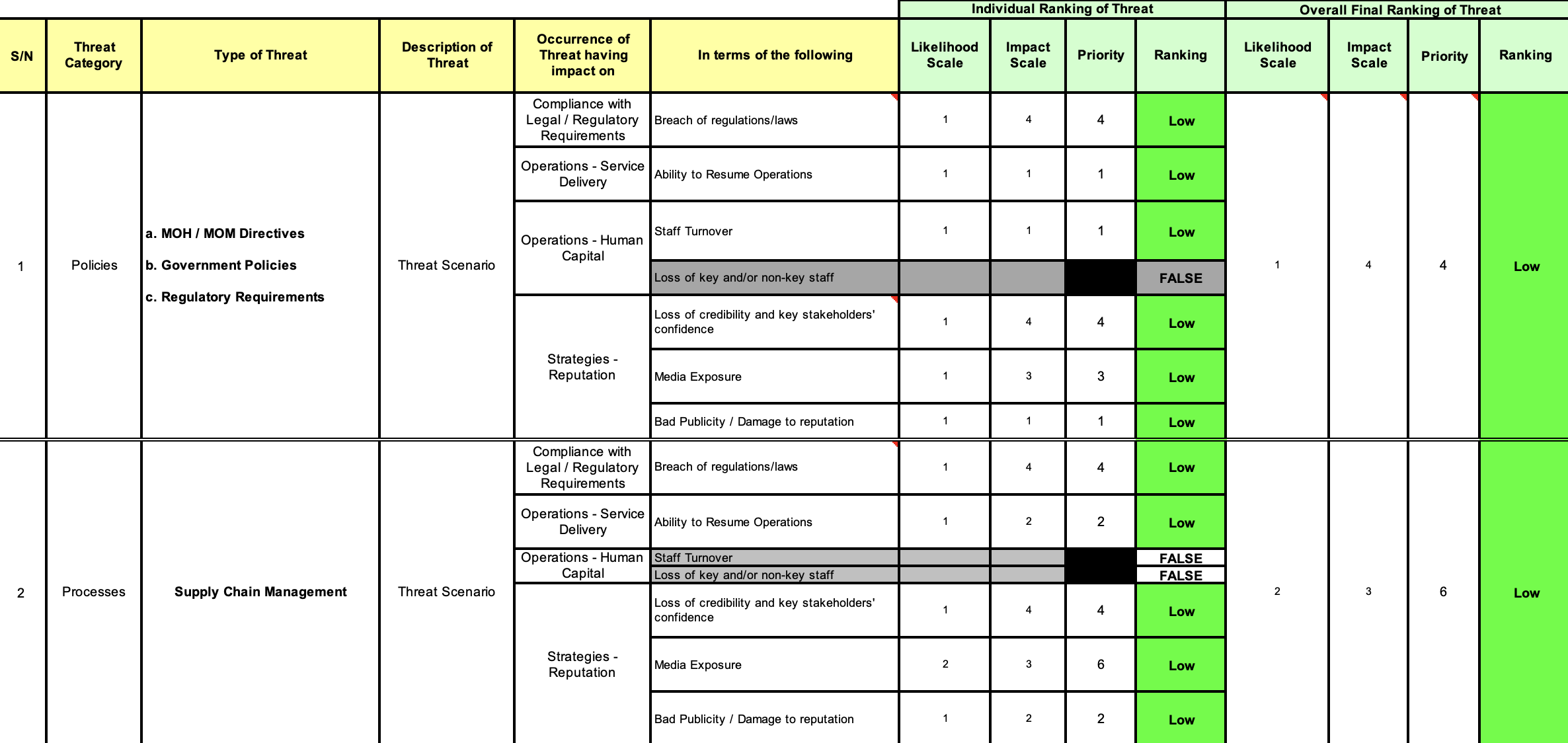
Although BCM plans were in place, latent vulnerabilities existed: overlapping responsibilities, unclear decision hierarchies, and communication gaps. Interdependent workflows risked compounding failures during disruptions. The exercise needed to simulate realistic crises to expose both current operational gaps and potential future vulnerabilities in a human-centered way.
Approach
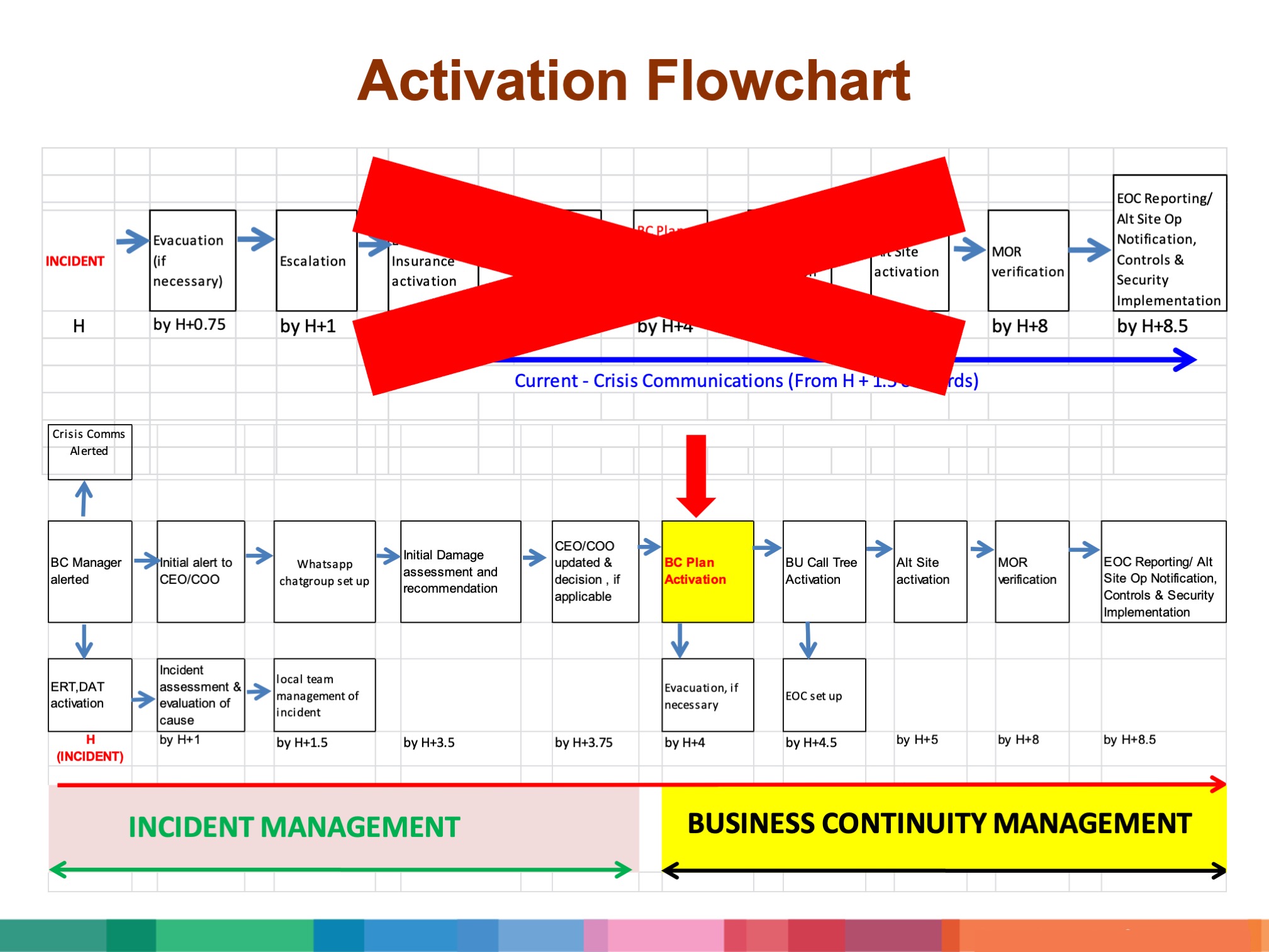
The process began with systems observation, mapping critical workflows, communication channels, and dependencies to understand how stress could trigger delays or errors.
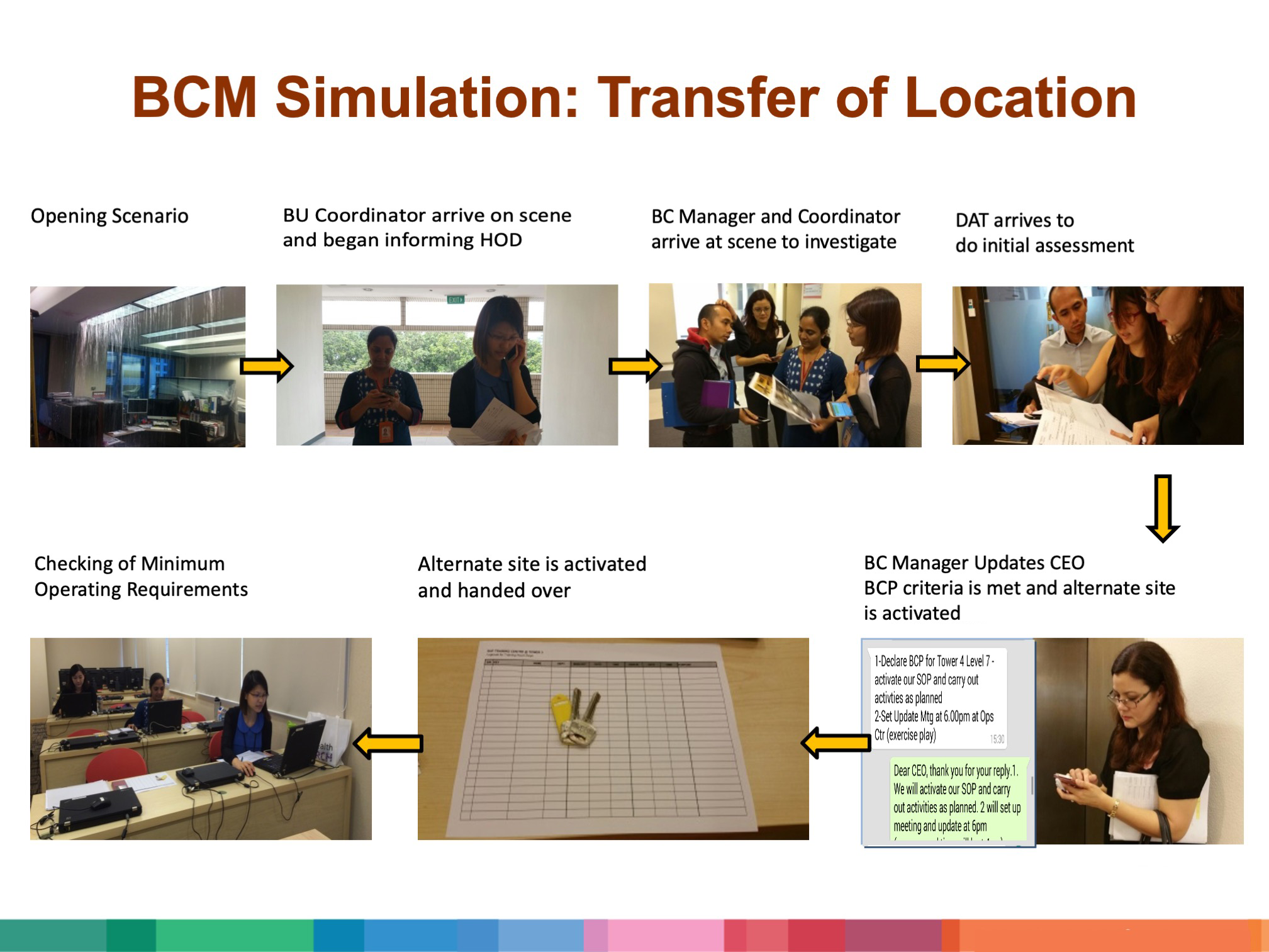
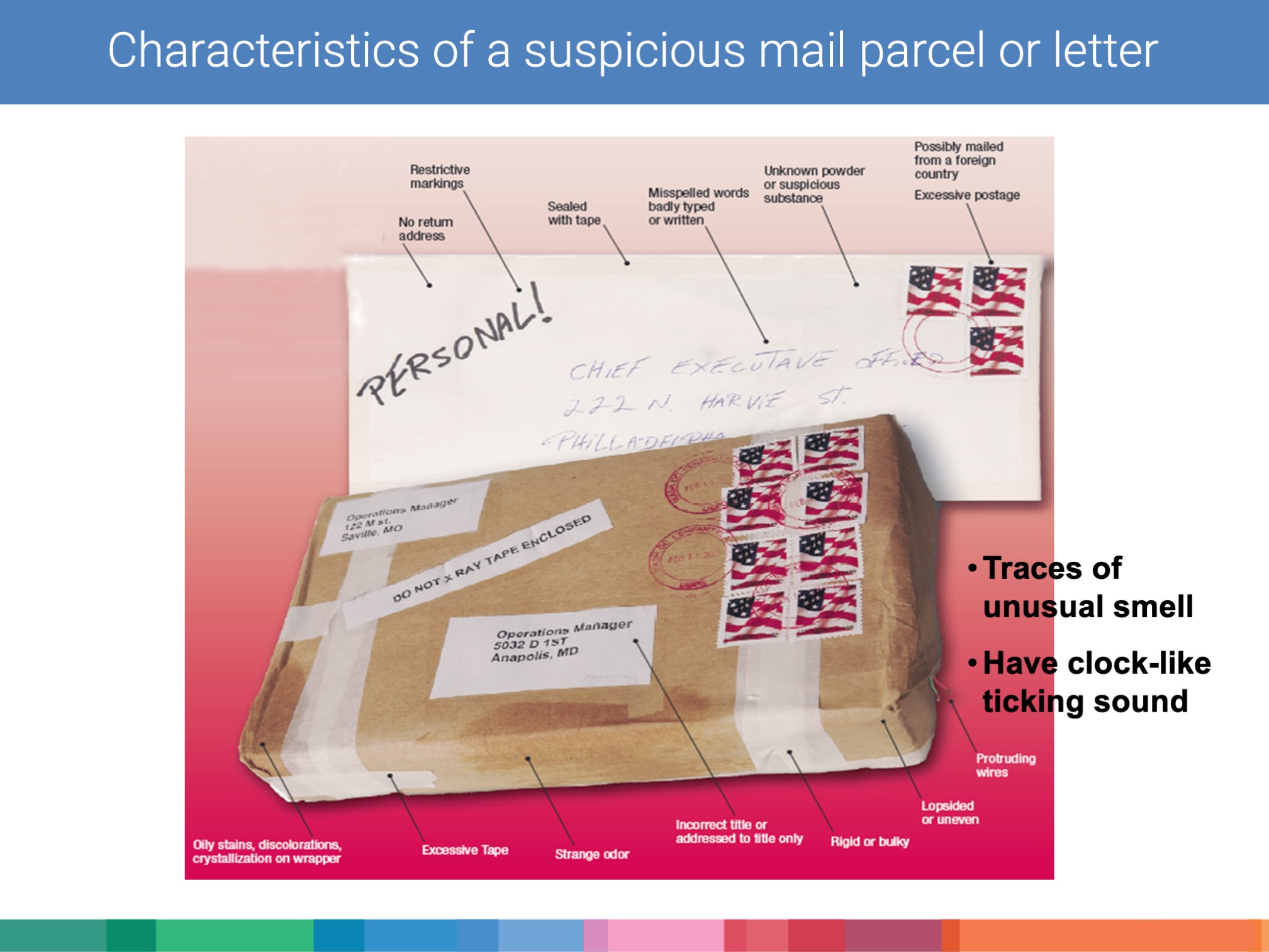
Scenario facilitation was used to conduct realistic crisis simulations, allowing teams to respond while observers noted bottlenecks and friction points. Scenarios included likely disruptions and extreme “what-if” events to reveal how adaptability and coordination could be improved. Stakeholders across departments and external partners were coordinated to ensure aligned objectives and shared understanding of interdependencies. Observations and feedback were then used for iterative refinement of existing BCM protocols.
Outcome
The outcome was improved role clarity, communication efficiency, and real-time decision-making. Hidden interdependencies and potential future risks were identified, and lessons from this were translated into practical refinements for ongoing BCM readiness. By applying systems and future thinking, the organization gained a holistic view of resilience.
Key Takeaways
- Problem: Operational stress and hidden interdependencies created risk during crises.
- Approach: Human-centered systems observation, scenario facilitation, and future-focused stress testing.
- Impact: Clearer responsibilities, improved coordination, actionable observations, and strengthened readiness.
- Role: Planned and managed logistics, coordinated stakeholders, designed realistic scenarios, observed systemic interactions, and translated findings into practical improvements.